A little practical help
Measure for a Christmas tree
Make room for the tree you will decorate, not just the tree in the box.
Read the guide →Save floor space without losing the feeling of a real Christmas corner.
By Chris McGuire · Updated
A narrow silhouette or a tabletop tree can give you the feeling without taking over the room. Compare the actual dimensions, then let a few favorite ornaments lead.
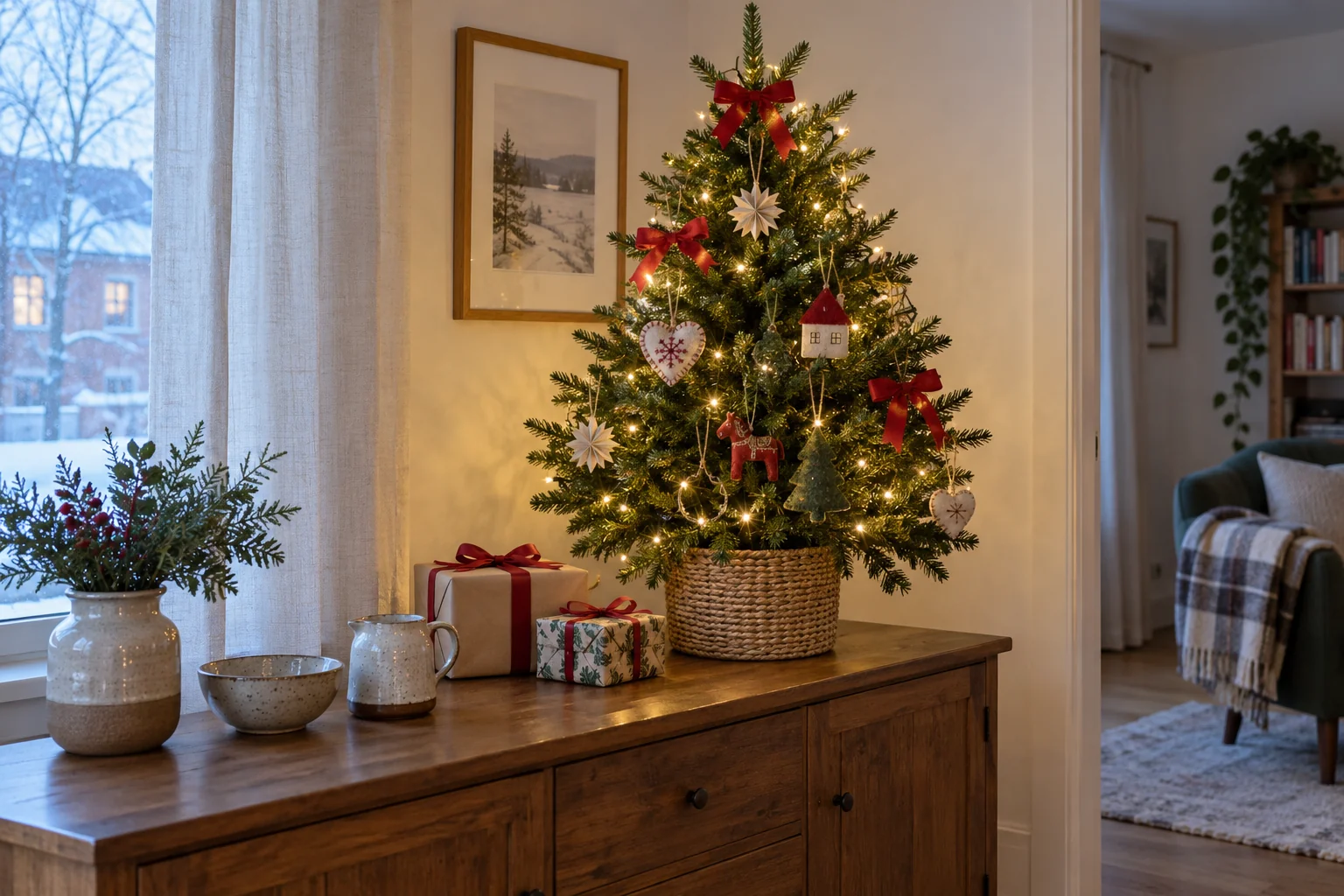 AI illustration
Give a small tree a place of its own on a stable surface. Repeat one ribbon and a few smaller ornaments rather than shrinking a whole-room display.
Decorating scenes are AI illustrations for inspiration. Use the measurements and guidance below to plan your own display. Our editorial approach.
Worked examples use the stated dimensions. Swap in your measurements; product instructions set the actual limits.
Look for a color, a shape or a small detail you would enjoy living with.
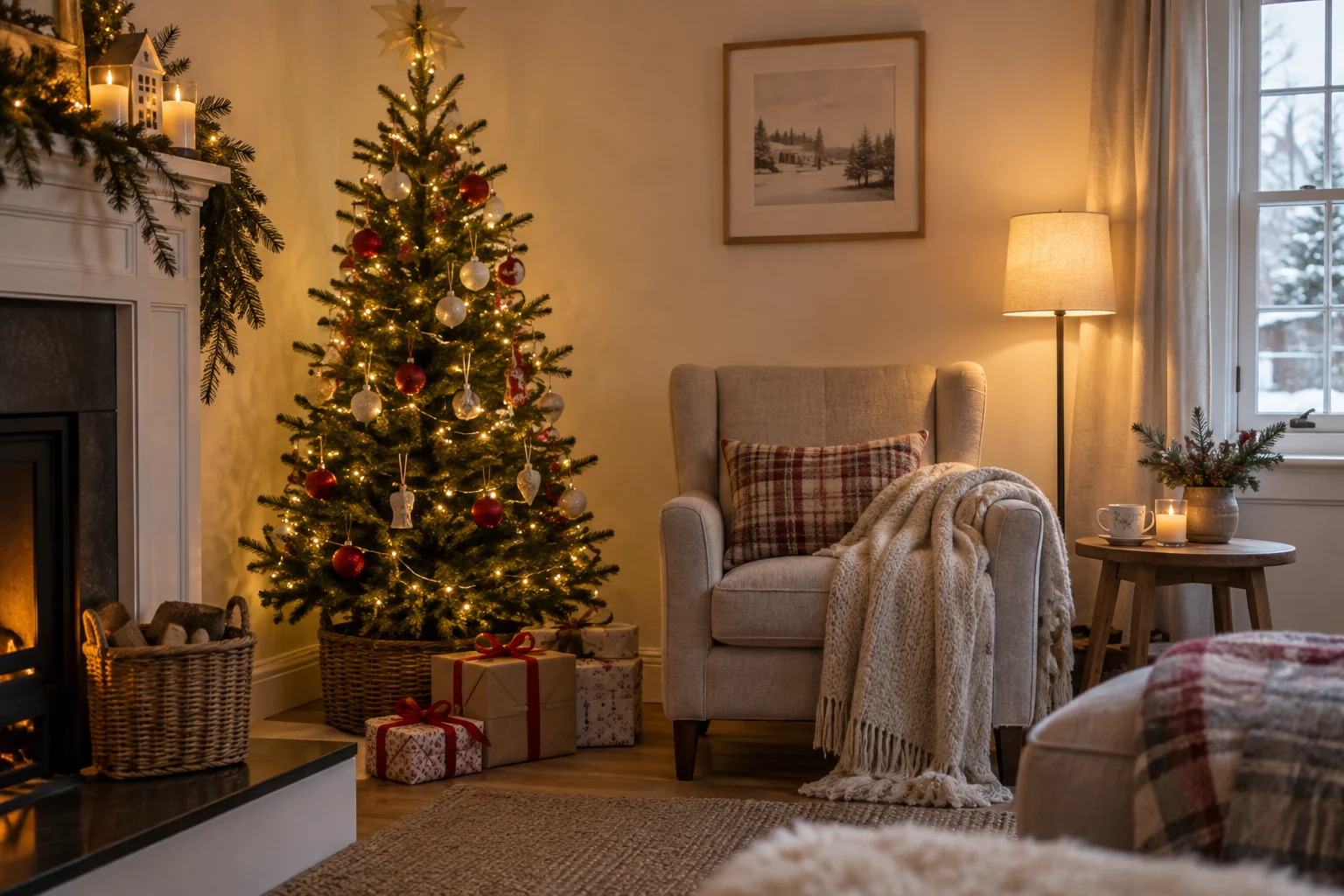 AI illustration
A tree, a small base treatment and a little clear space can be enough to make the corner feel complete.
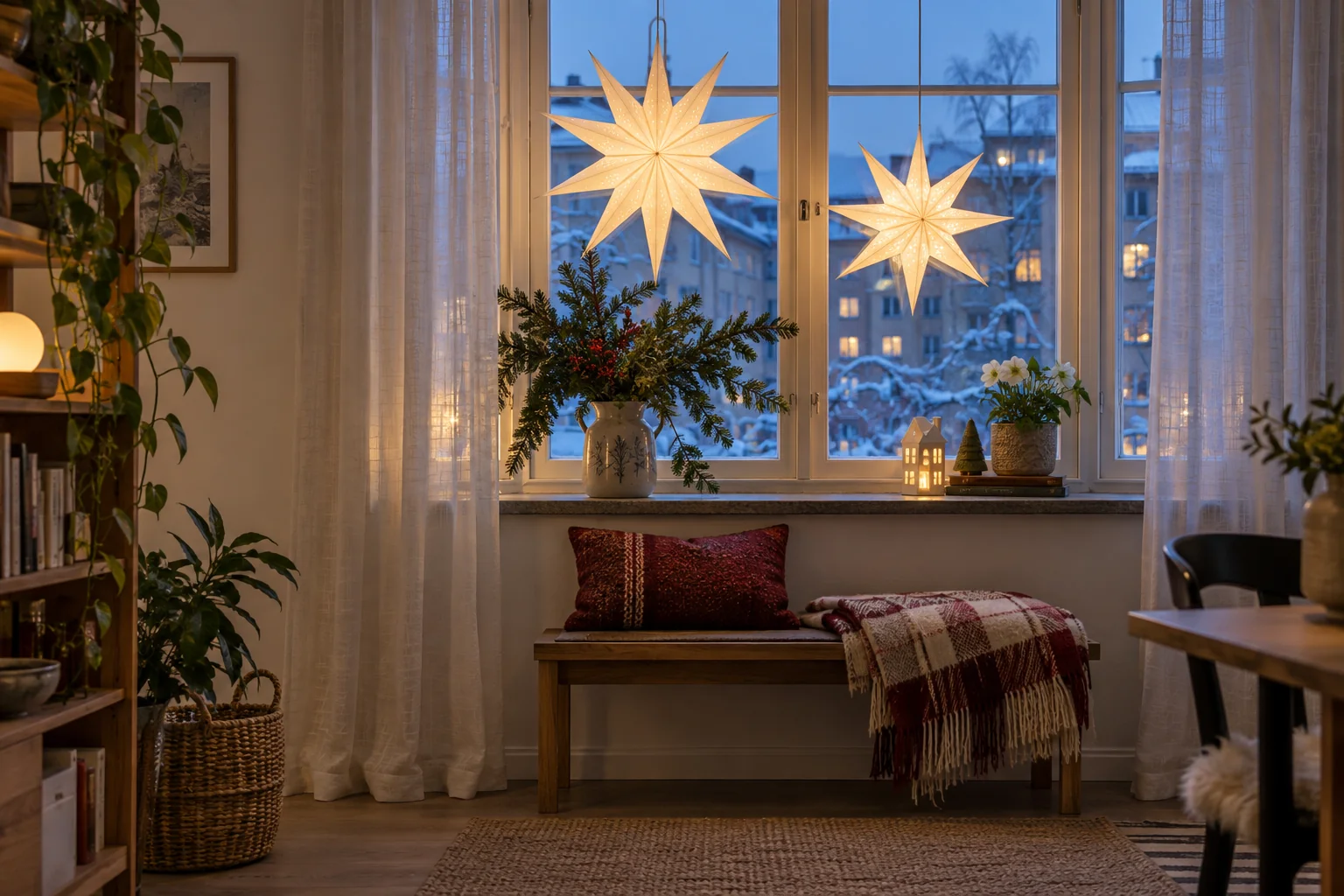 AI illustration
A separate window accent connects the room without adding another large footprint. Keep openings and exits usable.
Slim, pencil and corner are shape descriptions, not standard measurements. Compare the widest assembled diameter and the stand footprint. A tall narrow tree still needs room for branch shaping, a topper and nearby movement.
Choose a slim tree for a fuller silhouette with less spread. Choose a pencil profile for a tighter vertical accent. Consider a tabletop or intentionally flat-back design if a full circular footprint does not work.
| Type | A good fit for | Compare before buying | Tradeoff |
|---|---|---|---|
| Slim profile | A narrower version of a familiar full tree shape. | Compare exact width at your chosen height. | Two trees called slim can have very different footprints. |
| Pencil profile | A strong vertical accent in a small corner. | Check how much branch space remains for your larger ornaments. | A very narrow outline can look crowded with wide ribbon or oversized decorations. |
| Flat-back or corner design | A tree specifically made to sit closer to a wall. | Read the intended orientation and assembled depth. | It may not look finished from every viewing angle. |
| Tabletop alternative | A festive focal point above floor level. | Include the support surface, base and topper in the plan. | The support takes space too; a narrow cabinet may be more useful than a small tree on a large table. |
It can extend beyond the lowest branches.
Test the outline with tape while doors and drawers are in use.
Check the depth and spacing of branches for favorite pieces.
Compare added height and support needs before buying.
Choosing by height alone because the listing says space-saving. Measure the floor and stand dimensions first.
Use fewer large ornaments and place cherished pieces at the main viewing side. Existing ribbon can be cut or arranged more sparingly for a narrow silhouette.
A fitted base treatment, a modest topper and a storage plan for the longest section.
Make room for the tree you will decorate, not just the tree in the box.
Read the guide →The most personal Christmas pieces may already be in your boxes.
Read the guide →One good corner. Plenty of Christmas. Still room to live.
Make this look your own →Keep a few measurements and your favorite possibilities together. Start with what you have; leave room for the one piece that would make it feel special.
Make my Christmas list →Save a favorite idea, note the space you have and start with the pieces you already love. Add the rest when you’re ready.