A little practical help
Outdoor Christmas setup checklist
Lay it out, check it, then install one reachable section at a time.
Read the guide →Plan the route to power as carefully as the route of the lights.
By Chris McGuire · Updated
Think about the hours you will actually enjoy the display. A reliable routine can be more useful than a long list of effects.
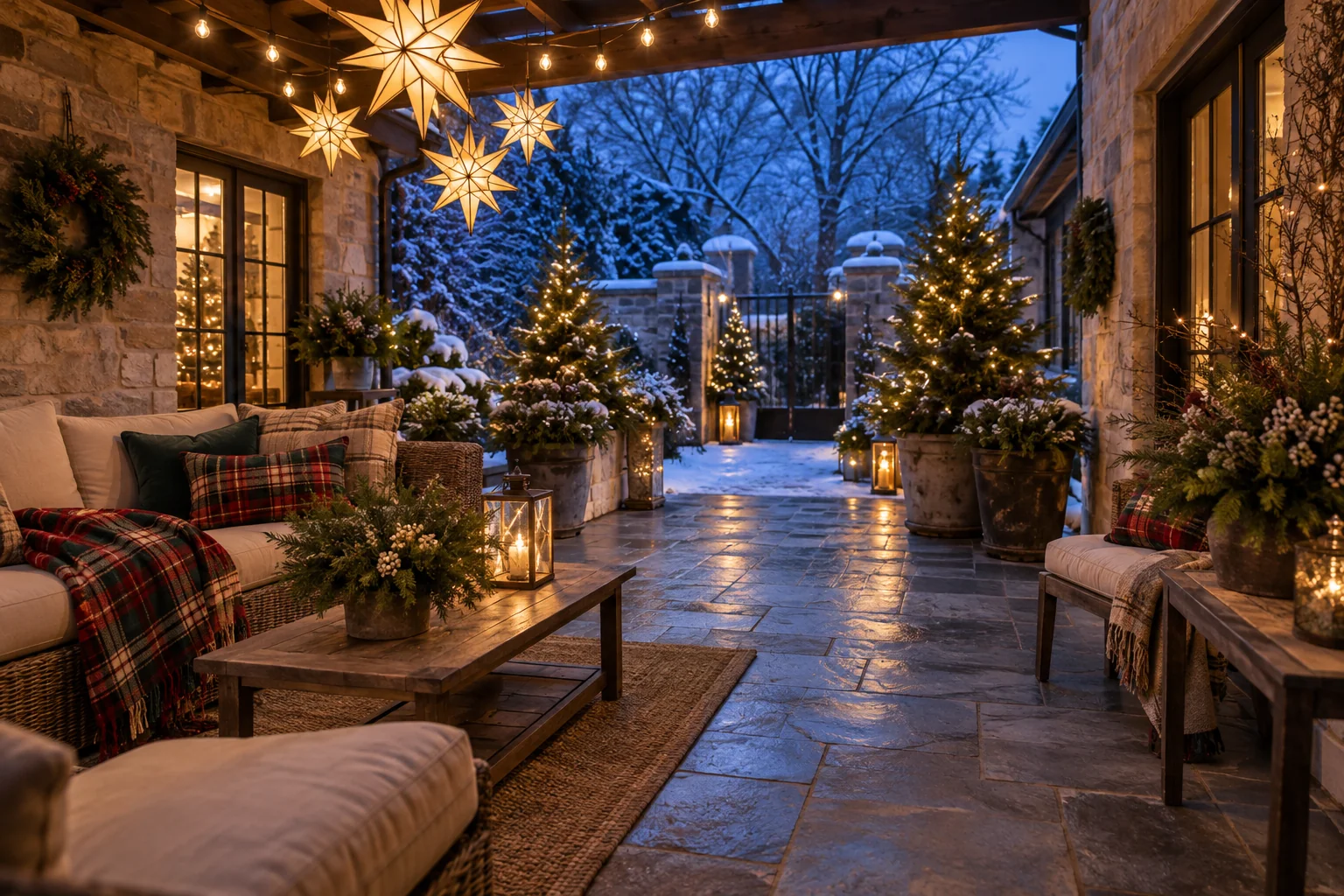 AI illustration
Bring the sparkle into a space you actually use. Repeat a star shape or a warm glow, and choose fixtures suited to the setting.
Decorating scenes are AI illustrations for inspiration. Use the measurements and guidance below to plan your own display. Our editorial approach.
Worked examples use the stated dimensions. Swap in your measurements; product instructions set the actual limits.
Look for a color, a shape or a small detail you would enjoy living with.
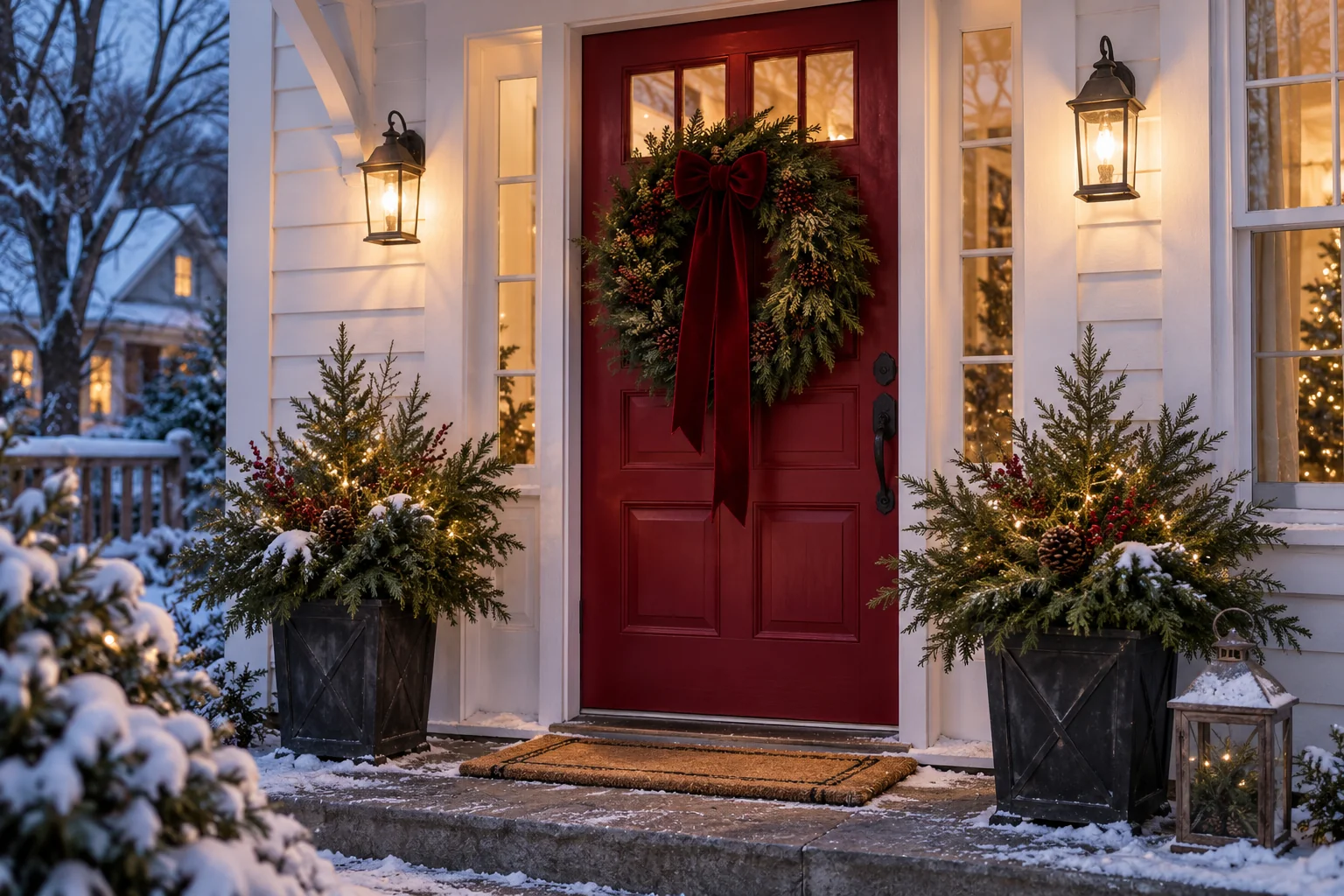 AI illustration
Choose a schedule around the time you come home, with an appropriate switch-off routine afterward.
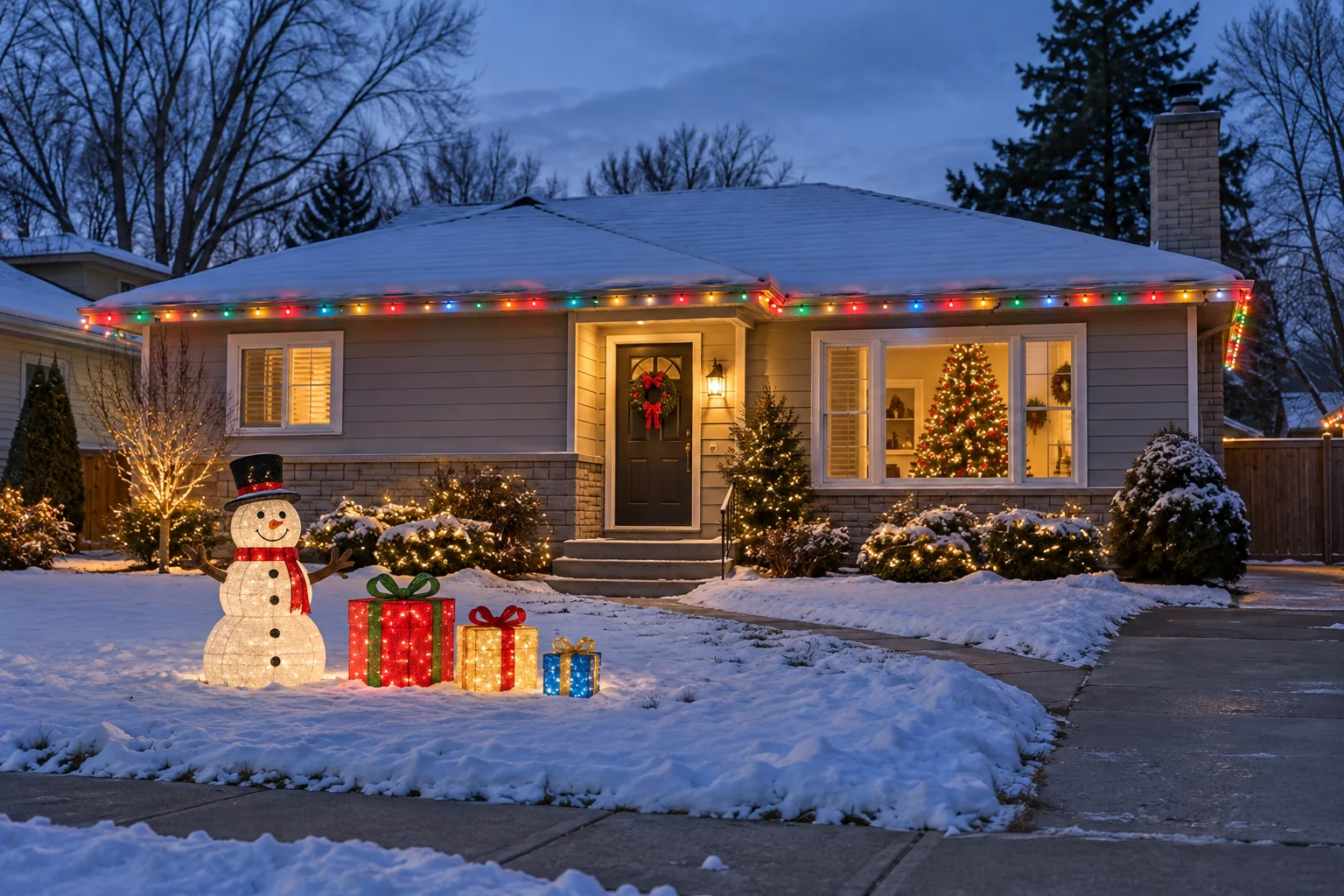 AI illustration
Keep brightness and timing considerate of nearby homes. The photograph illustrates mood, not wiring or capacity.
Choose the control around the display’s actual load, location and schedule. Count the devices you intend to connect and read their labels. A timer or smart plug adds convenience, but it does not make an unsuitable cord, connection or outlet appropriate for outdoor use.
A simple timer suits a repeatable evening schedule. A dusk sensor suits changing sunset times if its placement avoids interference. A smart control is useful when remote changes justify the extra setup.
| Type | A good fit for | Compare before buying | Tradeoff |
|---|---|---|---|
| Mechanical timer | A straightforward repeating on/off period. | Compare interval size, setup procedure and behavior after power loss. | The dial must remain accessible; verify the exact outdoor installation directions. |
| Digital timer | More specific schedules where the model supports them. | Check number of programs and whether settings survive an outage. | More programming options can add complexity for a simple nightly display. |
| Dusk-sensing control | Automatic operation based on surrounding light. | Consider where the sensor will see daylight and other lights. | A nearby display or porch lamp may affect behavior; follow placement guidance. |
| Outdoor smart plug | Remote scheduling and convenient app control. | Check network requirements, load ratings and outlet control arrangement. | Two sockets may switch together rather than independently; verify the model. |
Compare the device rating for the type of equipment you will connect.
Check control, cord and every connection component separately.
Keep leads away from door pinch points and walking paths.
Test the whole setup after switching power off and back on.
Buying by socket count alone. More sockets do not increase the capacity of the upstream circuit or make a larger load acceptable.
A working timer may already do everything you need. Improve the schedule and labels before replacing it with a connected device.
Properly rated equipment selected for the installation; use a qualified electrician for uncertain wiring, outlets or capacity.
Lay it out, check it, then install one reachable section at a time.
Read the guide →Identify the symptom, check the instructions and know when to stop.
Read the guide →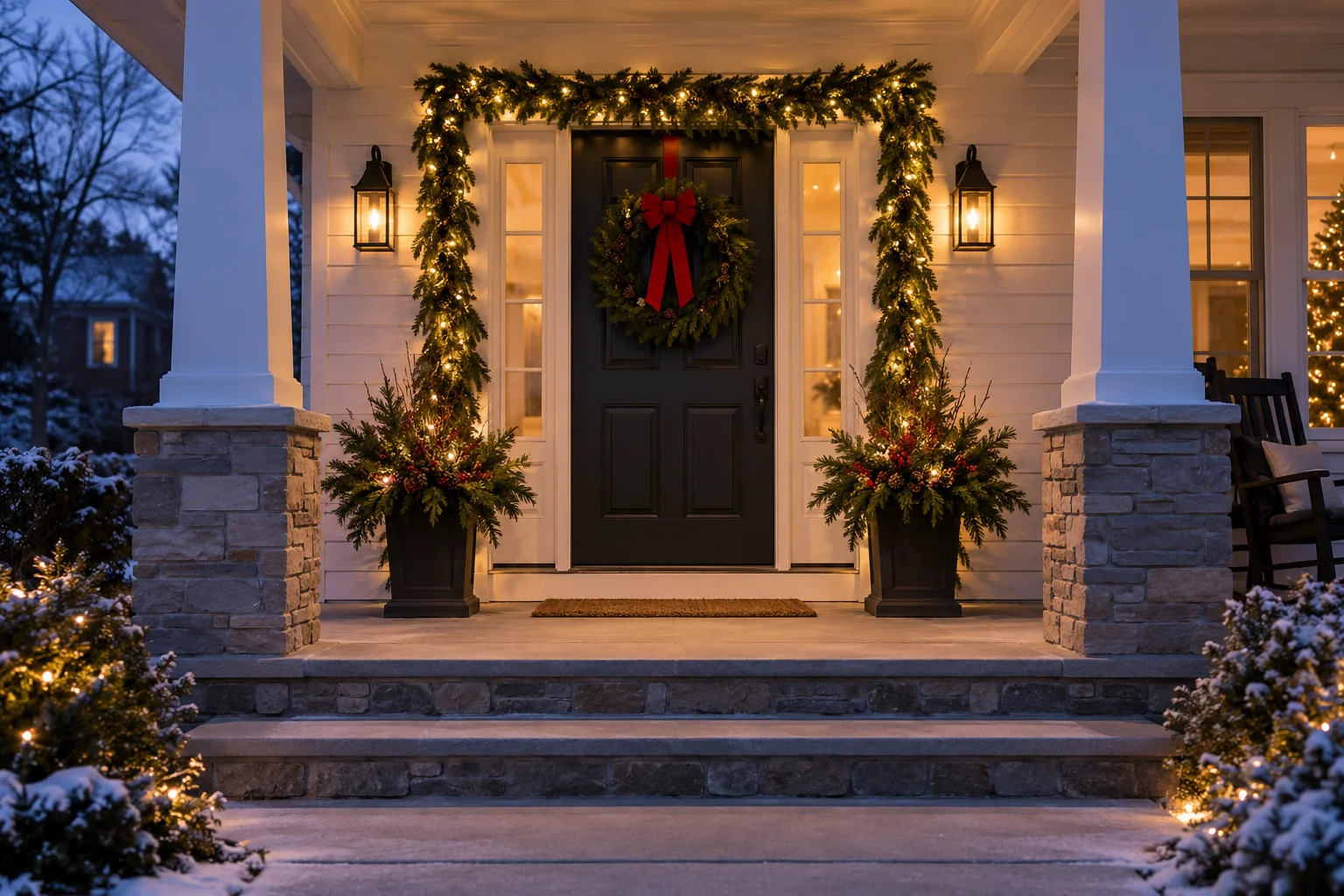 AI illustration
Greenery, a red ribbon and a welcoming line of warm light.
Make this look your own →Keep a few measurements and your favorite possibilities together. Start with what you have; leave room for the one piece that would make it feel special.
Make my Christmas list →Save a favorite idea, note the space you have and start with the pieces you already love. Add the rest when you’re ready.