Choose a lovely little anchor
A tabletop or slim tree feels intentional when it has a clear place, not when it is squeezed into the last gap.
One good corner. Plenty of Christmas. Still room to live.
 AI illustration
Let one corner carry the feeling and keep the everyday route through the room clear.
AI-created decorating inspiration. Borrow the colors and composition, then use pieces and placement suited to your home.
A little tree beside the window. A star glowing above a favorite chair. A tray ready for a cozy evening. Christmas does not need a spare room; it needs a place to begin.
Borrow the parts you love. These are possibilities, not a matching set you have to buy.
 AI illustration
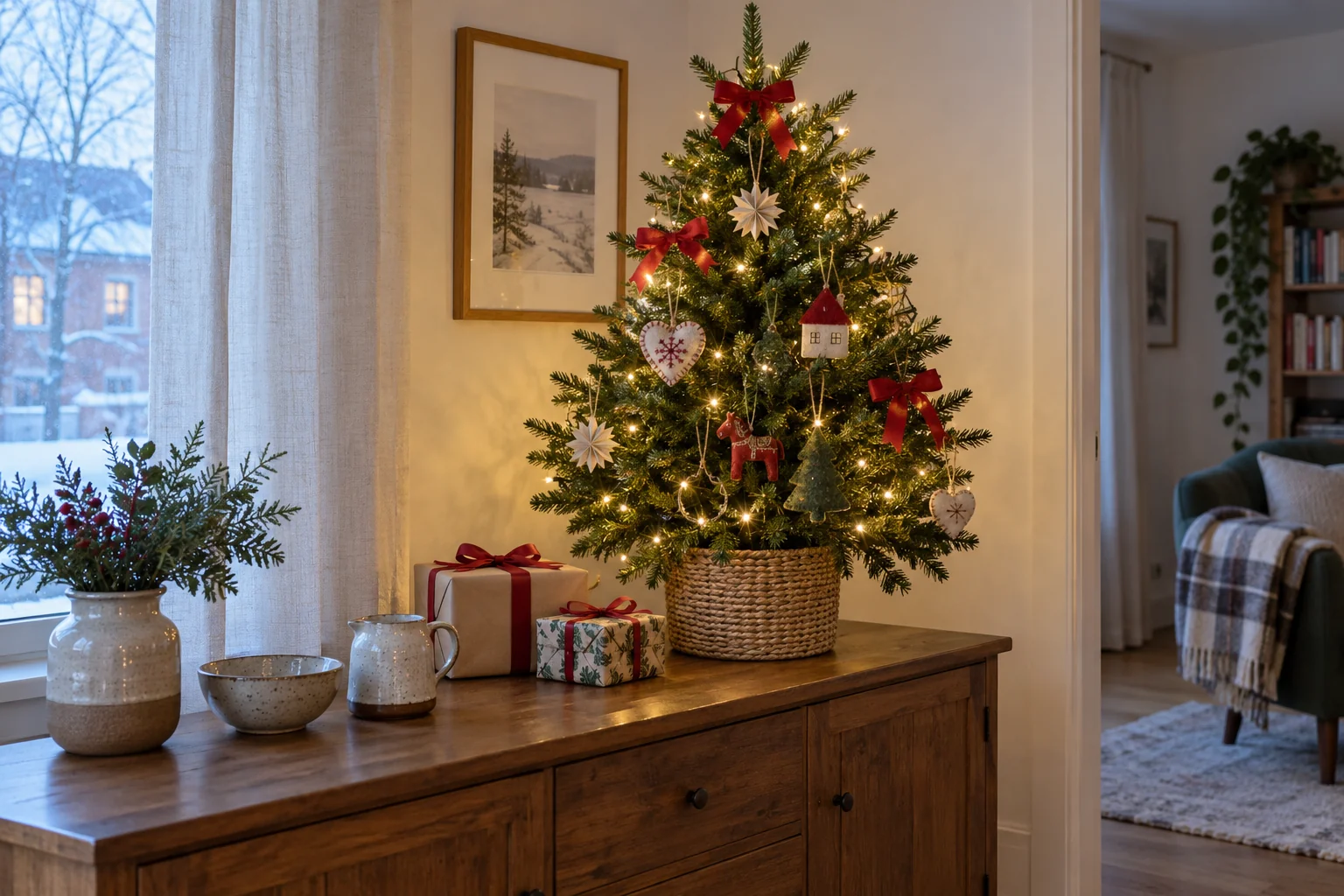
Give a small tree a place of its own on a stable surface. Repeat one ribbon and a few smaller ornaments rather than shrinking a whole-room display.
 AI illustration
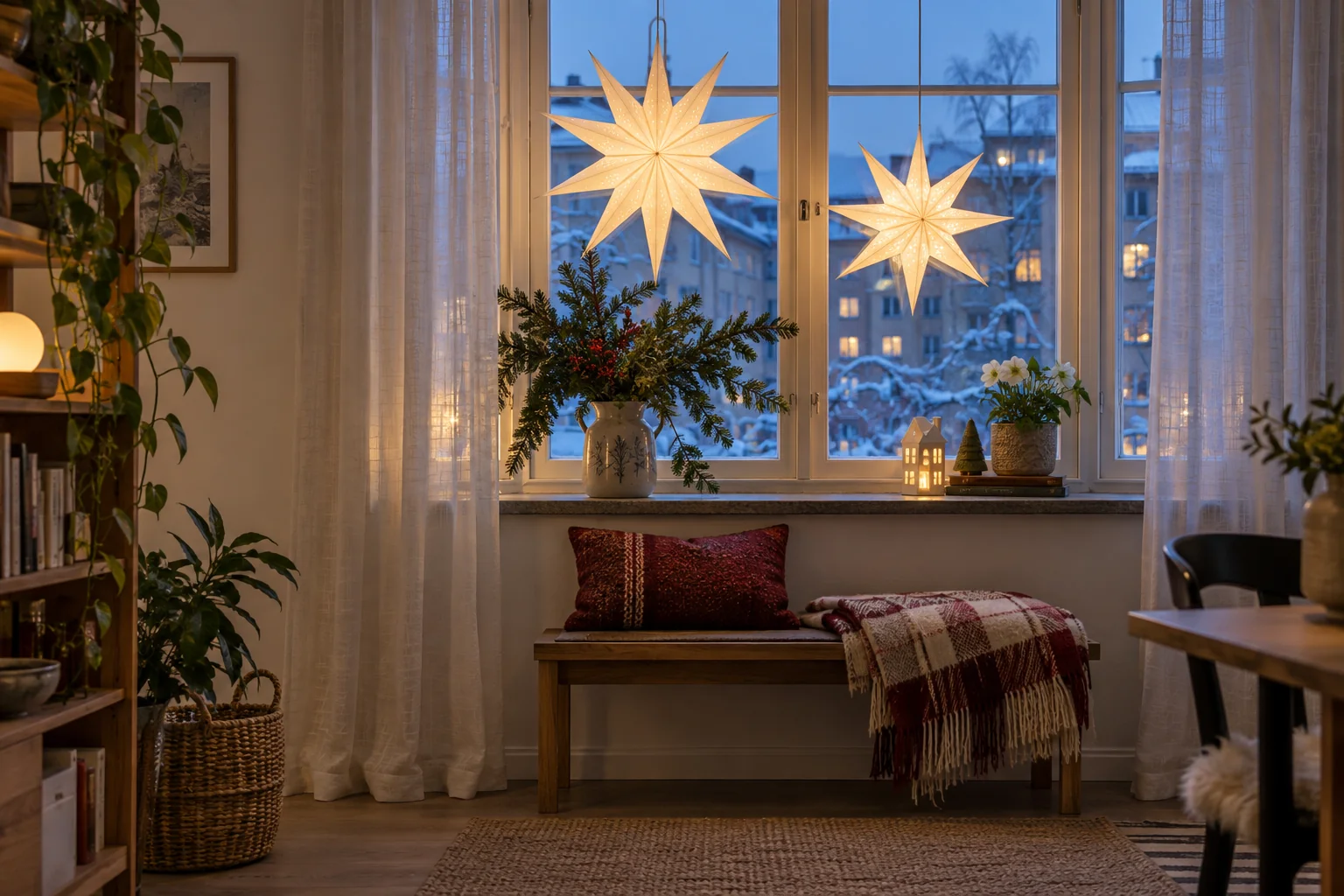
Think vertically when floor space is precious. Keep the window, curtains and any exit usable, and follow the lights’ placement instructions.
 AI illustration
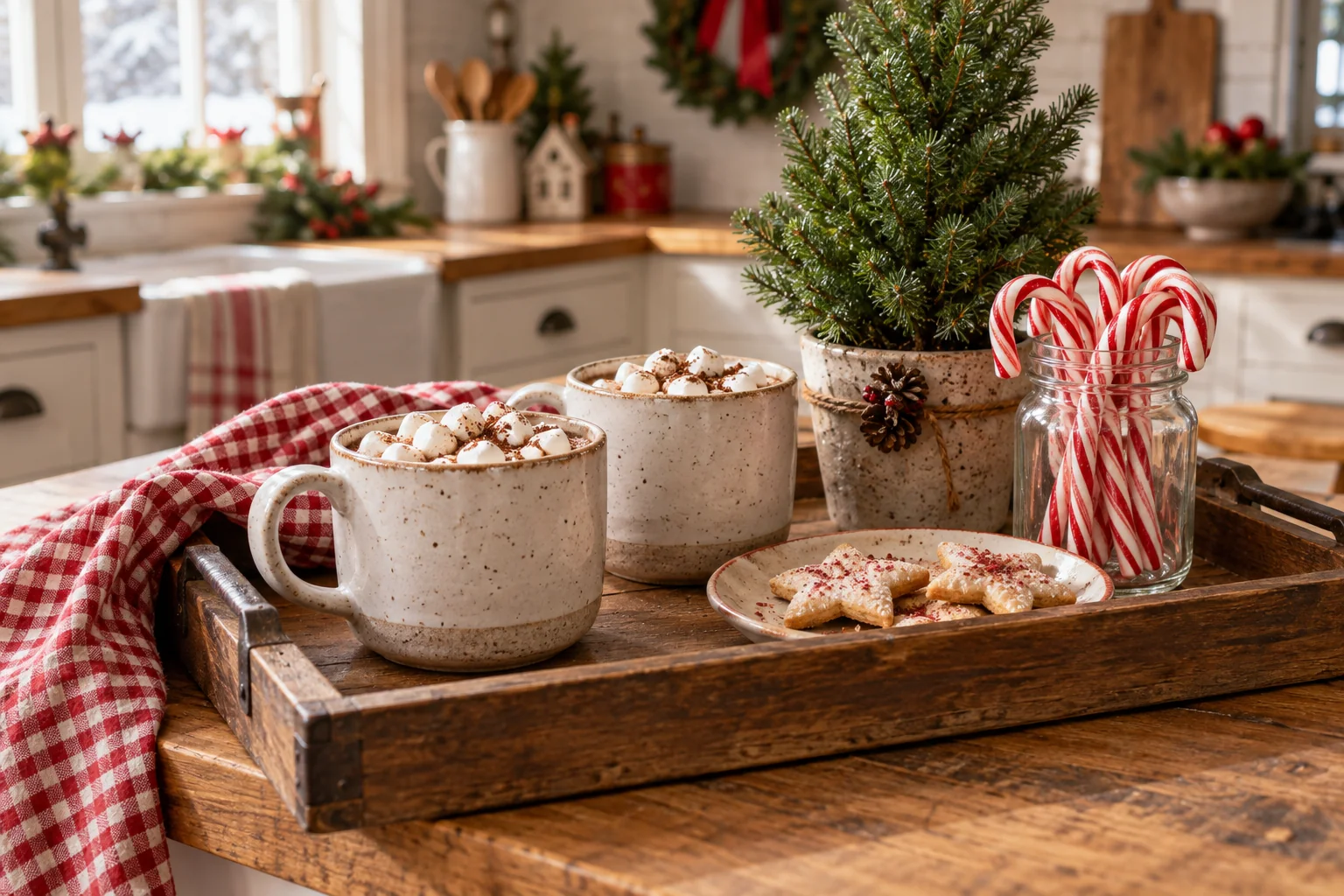
A tray turns a few ordinary things into an occasion. Use your favorite mugs, a little cloth and one small festive detail; the treats can do the rest.
A tabletop or slim tree feels intentional when it has a clear place, not when it is squeezed into the last gap.
A window accent can carry the feeling across the room while the table stays useful for everyday life.
A favorite mug, a soft throw and a small tray can create a ritual without adding another large decoration.
You can have a whole Christmas feeling in one good corner.
Use favorite ornaments, an existing basket or a suitable stable side surface. Before buying a smaller tree, try moving the current furniture and marking a realistic footprint; the useful space may be different from the apparent empty corner.
A tabletop tree with a few favorite ornaments. Choose a stable surface and keep its usable edges clear.
A slim tree with a modest topper and a repeated ribbon. Add a base treatment that fits the stand.
Echo one color at the window or on a shelf. Keep the second grouping small so the tree remains the anchor.
Measure floor width and depth with doors and drawers open. Record ceiling clearance, topper allowance and the stand dimensions. Include the support furniture if choosing a tabletop tree.
Compare actual assembled width and stand footprint.
Read the buying guide →Use the pieces you own that fit the branch spacing.
Read the buying guide →Use vertical space without obstructing the window.
Read the buying guide →Measure packed pieces and the real cupboard opening.
Read the buying guide →Mark the full footprint and walk around it before unpacking ornaments.
Position and shape the tree as directed.
Place larger favorite ornaments first, then add smaller fillers.
Check the room from the normal seating position and remove anything that crowds the route.
Choosing a narrow tree by its name alone. “Slim” and “pencil” are not standardized sizes.
Group the entire corner in one clearly labeled set where practical. Keep a photograph of the footprint and note the topper’s added height for next year.
Make room for the tree you will decorate, not just the tree in the box.
Read the guide →The most personal Christmas pieces may already be in your boxes.
Read the guide →Save a favorite idea, note the space you have and start with the pieces you already love. Add the rest when you’re ready.
By Chris McGuire · Updated