Let one piece begin the story
Choose the building, figure or keepsake that matters most, and arrange the supporting pieces around it.
A tiny village, a familiar keepsake and a scene worth stopping for.
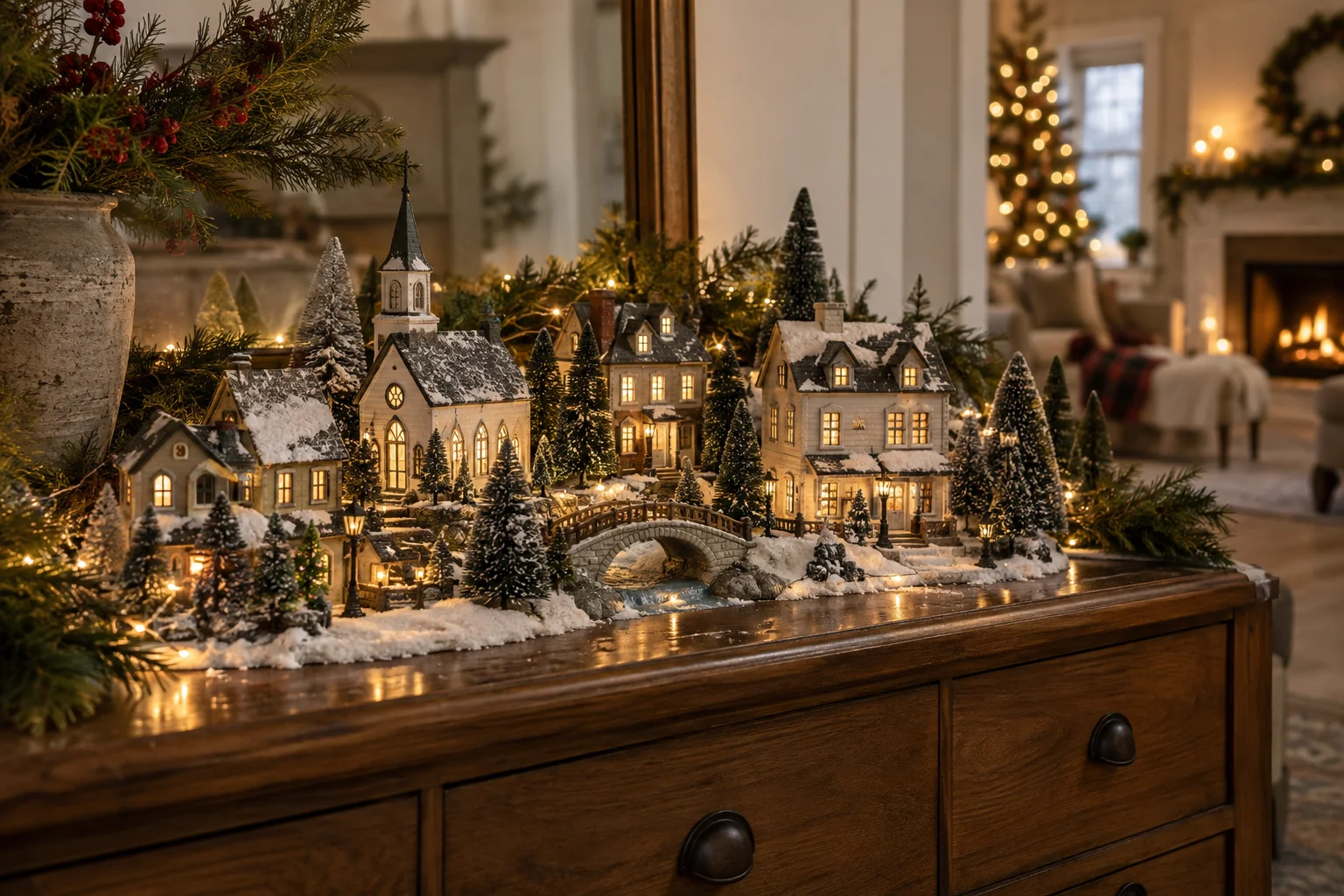 AI illustration
Choose a favorite piece as the anchor and leave space for the smaller details.
AI-created decorating inspiration. Borrow the colors and composition, then use pieces and placement suited to your home.
A tiny lit window. A familiar figure. The ornament someone made years ago. Give these pieces a stage where you can stop and enjoy them, whether your tradition is a village, a nativity or a tray of treasured ornaments.
Borrow the parts you love. These are possibilities, not a matching set you have to buy.
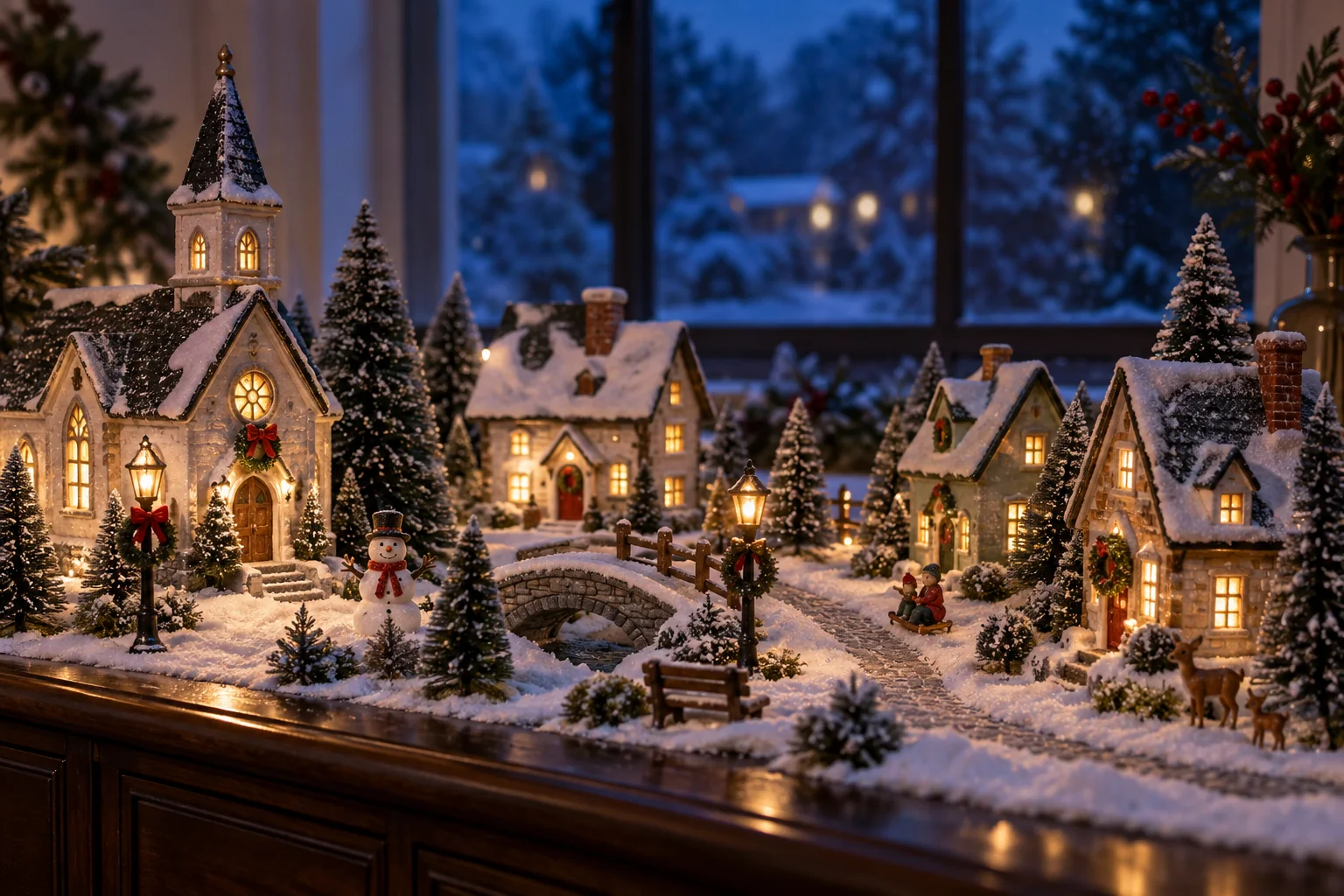 AI illustration
Make a path for the eye as well as the little townspeople. Group buildings, vary their position and leave a clearing where the story can breathe.
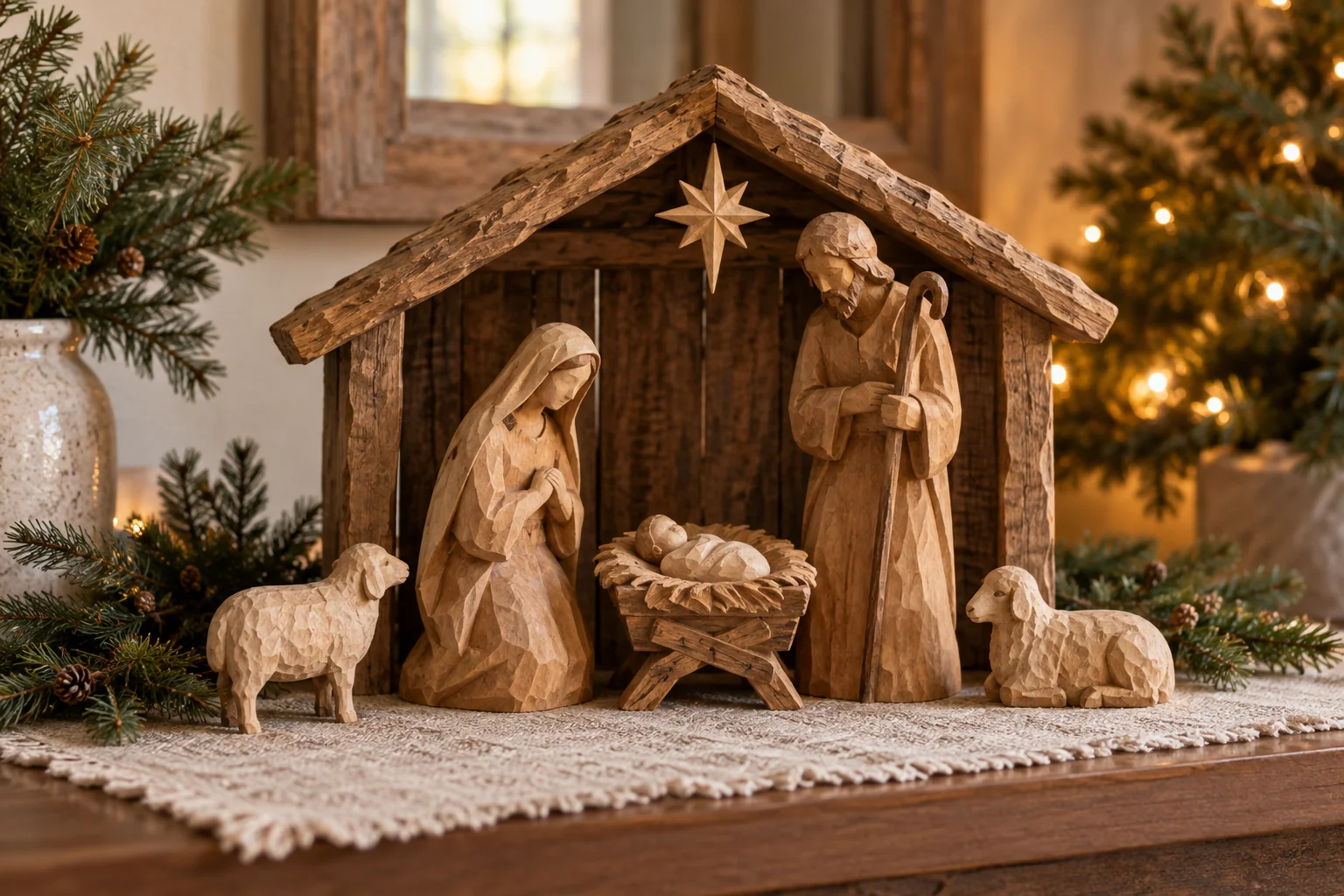 AI illustration
Give a meaningful scene its own space. A restrained backdrop and a little light can be more moving than a crowded collection of accents.
 AI illustration
Let the meaningful pieces lead. A common ribbon or a small color group can connect ornaments collected over many different Christmases.
Choose the building, figure or keepsake that matters most, and arrange the supporting pieces around it.
The space between objects helps you see their details. A small display can feel wonderfully complete.
One thoughtful addition can become this year’s memory. It does not need to become a bigger collection every season.
The most magical thing here may already be in a box with your family’s name on it.
Start with the building, nativity or family keepsake you already bring out every year. A familiar tray can define the boundary, and existing unlit miniature trees can connect separate pieces.
A single building or scene with enough empty surface around it to feel special.
Add two or three supporting elements and vary their position. Leave the controls accessible.
Add one considered piece that fits the existing scale and storage. Rearrange before expanding the footprint.
Record usable surface width and depth, the largest piece’s footprint and access behind it. Check door or drawer use and keep all objects fully supported.
Check footprint and controls before choosing a surface.
Read the buying guide →Use a suitable existing shelf or sideboard if you can.
Read the buying guide →Choose as a meaningful alternative to the village, or give it its own clear area.
Read the buying guide →Keep the scale consistent with the main pieces.
Read the buying guide →Prioritize fragile shapes and original fitted packaging.
Read the buying guide →Position the largest piece first and view it at normal eye level.
Place supporting details without filling every gap.
Connect only the correct supplies and keep controls reachable.
Photograph the arrangement and save the matching packaging before the season gets busy.
Buying another building before checking whether the existing scene has room to breathe. A small open space can be part of the story.
Use fitted packaging for delicate buildings and figures. Label adapters and store the arrangement as a group with a photograph of the finished scene.
Leave next year a working display, a clear label and fewer mysteries.
Read the guide →The most personal Christmas pieces may already be in your boxes.
Read the guide →Save a favorite idea, note the space you have and start with the pieces you already love. Add the rest when you’re ready.
By Chris McGuire · Updated